Game Project
Magnet Runner
A 2D platform game built on physics-based mechanics and strategic gameplay
A reflex and strategy-driven experience built around magnet-based mechanics.
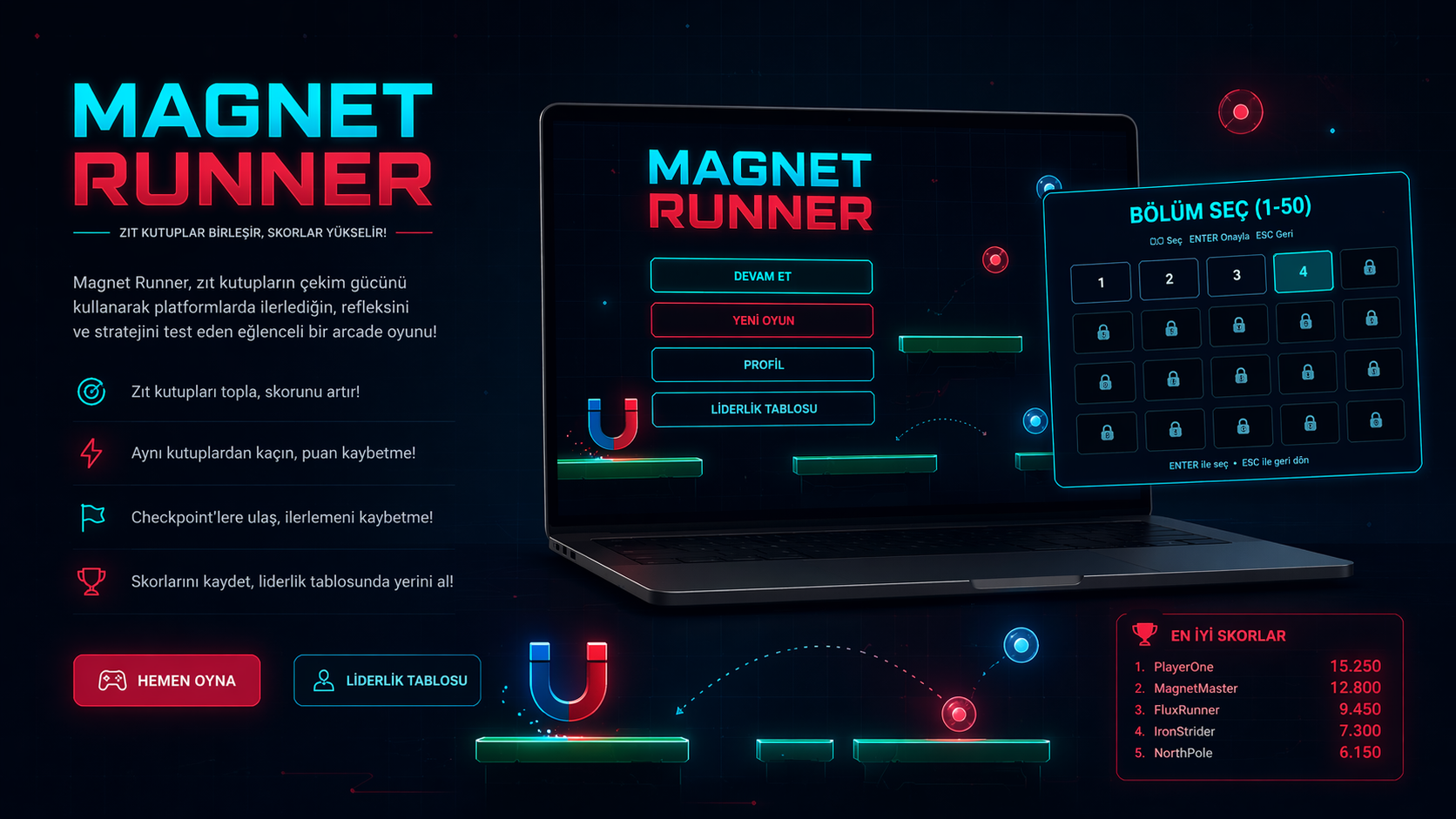
The cover visual highlights the platform structure, movement rhythm, and neon-toned interface feel that shape the game's identity.
About The Game
A 2D experience built around a magnet-based character
Magnet Runner is a 2D platform game developed using Pygame. The player controls a magnet-based character and progresses through levels by navigating obstacles and platforms.
Movement, obstacles, and progression are tied into one loop
Each stage is not only about moving forward; it is about reading polarity logic and making the right choice under pressure.
A balance of reflex play and strategic thinking
Because each choice directly affects score and progression, the game moves beyond a simple platformer into something more tactical.
How It Works
The core system is built around magnetic polarity
The main mechanic is based on magnetic polarity, and the player's scoring and progression decisions revolve around that rule set.
Points
Opposite poles gain points
Correct magnetic pairing rewards the player with stronger scoring and cleaner progression.
Penalty
Same poles lose points
Wrong decisions do not only affect score; they also increase pressure inside the level flow.
Timing
Requires precise timing
Magnetic advantage can quickly turn into risk when movement timing is even slightly off.
Strategy
Direction choice is part of the challenge
The game asks the player to balance risk, score potential, and movement planning at the same time.
Technologies
The technical backbone behind the game
Magnet Runner uses a compact but practical stack to manage gameplay, persistence, profiles, and scoring behavior together.
Pygame (Game Engine)
SQLite (Database)
Python
Features
System layers that make the game feel more complete
Beyond the core mechanic, Magnet Runner includes supporting systems that strengthen replayability and structure.
Leaderboard system
A visible score layer adds competition and makes each run feel more measurable.
Profile management
Player data, progress, and scores can be handled in a more controlled and persistent structure.
Level system
As stages progress, pacing and decision pressure increase, giving the mechanic more depth.
Checkpoint system
Checkpoints support retries without flattening the overall challenge curve.
Admin mode
An all-levels-unlocked mode is useful for testing, inspection, and full-access scenarios.
Gallery
In-game visual previews
The gallery collects multiple gameplay frames so the platform structure, UI rhythm, and level density can be read more clearly.
Opening flow and scene layout.
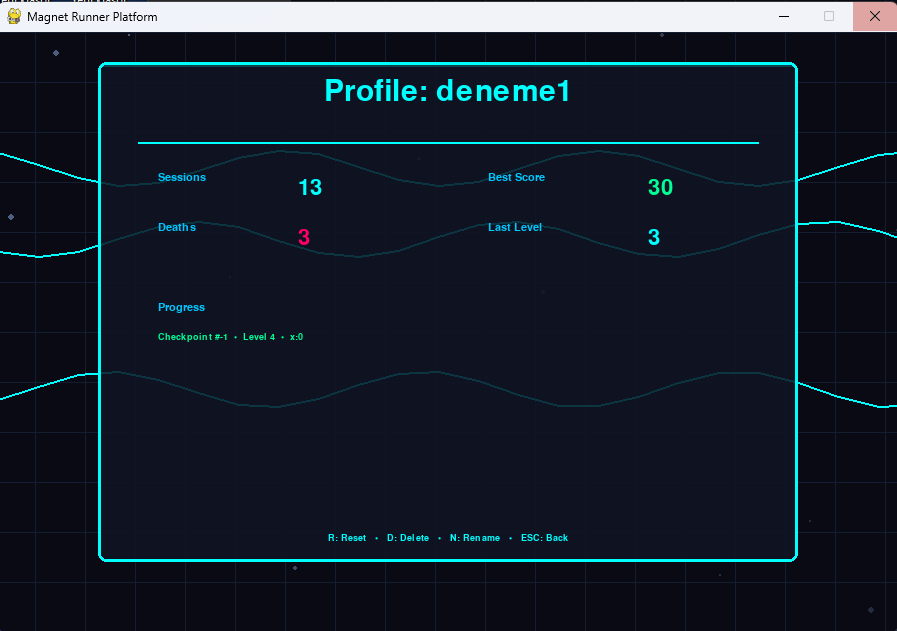
A platform structure with heavier magnetic decisions.
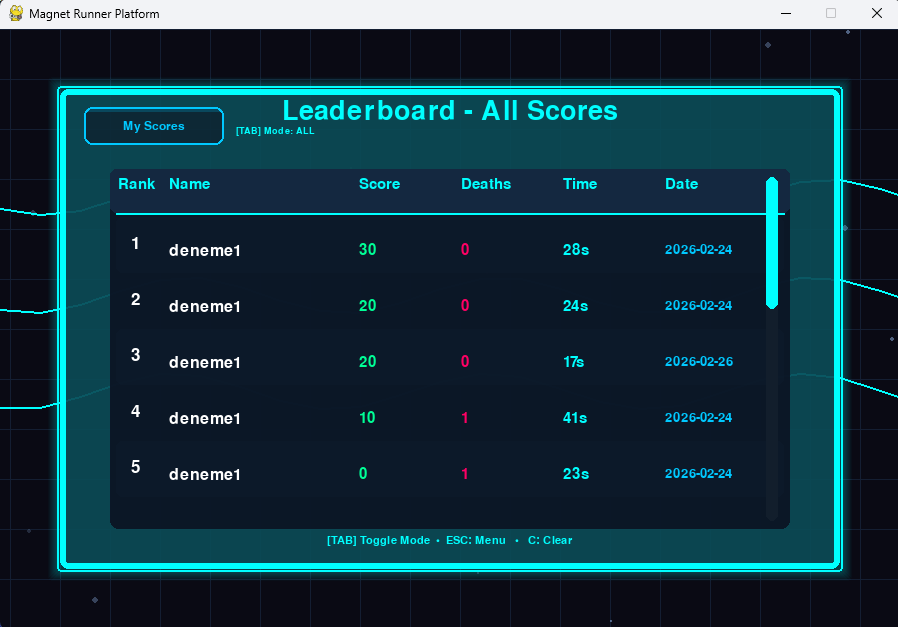
A frame where interface and movement rhythm appear together.
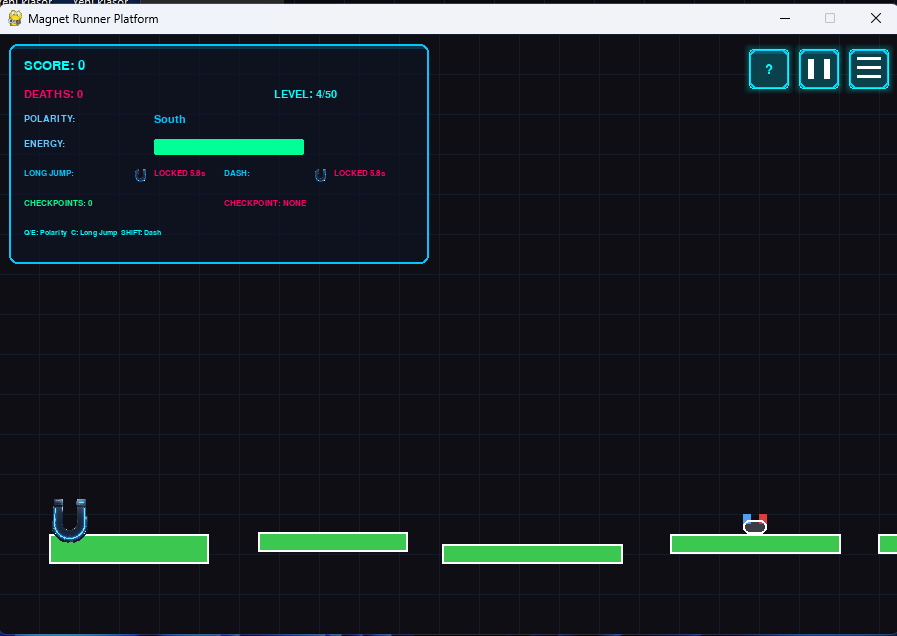
Riskier transitions and direction pressure.
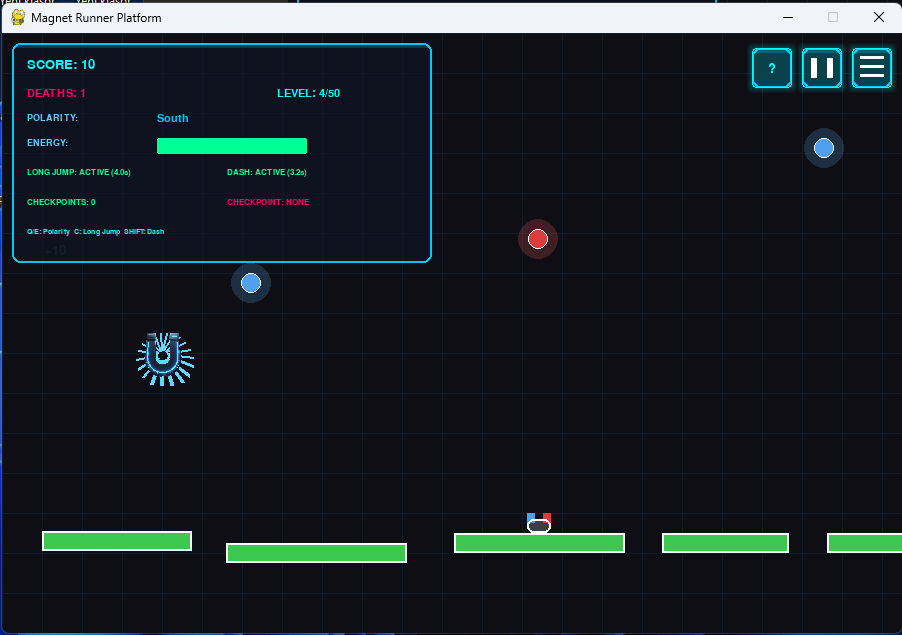
A moment where score and progression systems feel visible.
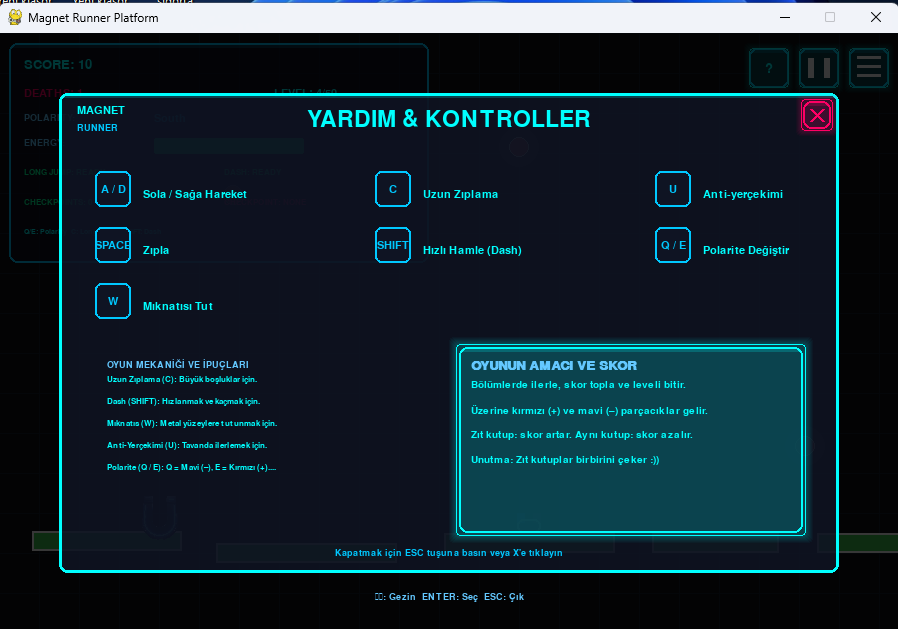
A denser stage composition from later gameplay.
Download / Source
Direct access to the repository
You can review the current GitHub repository to inspect the codebase, setup flow, and project structure behind the game.